Two people sit on the couch together every night. One remembers it as time spent together. The other remembers looking up from a screen and still feeling alone. They can agree on where they were and what they did, yet disagree about something that matters to both of them: whether they connected.
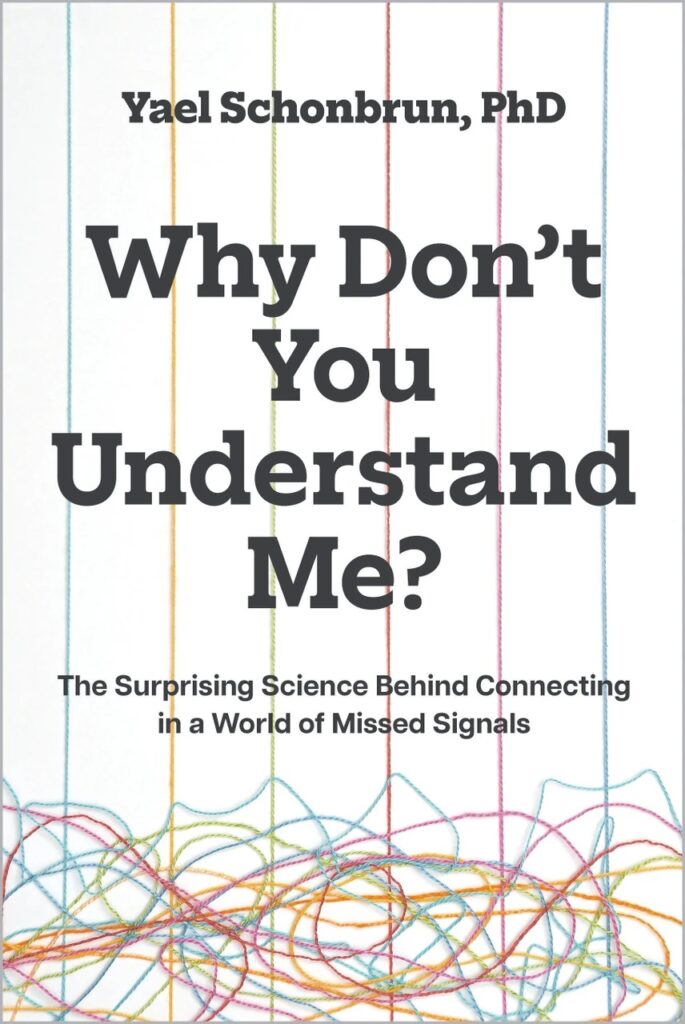
My guest on episode 474 is Dr. Yael Schonbrun, a clinical psychologist, couples therapist, and author of Why Don’t You Understand Me? The Surprising Science Behind Connecting in a World of Missed Signals. We begin with a distinction at the heart of her book. Communication happens between people. Understanding takes shape within each person, as we decide what to notice and make sense of it through our own experience. Even a clear message can land differently than we intended.
One question I wanted to explore was what better understanding actually changes. If someone’s explanation of their intentions repeatedly diverges from their behavior, asking about the gap may reveal something you hadn’t considered. It can also help you make a more informed decision about how much to rely on that person. In either case, you have learned something you couldn’t have learned by guessing at their motives.
We also discuss how understanding can change the options in front of us. If two people are arguing about whether they need a table, finding out that one of them just wants a flat surface to work on can open up a solution neither person was considering. Sometimes the underlying difference remains. Yael explains why recognizing that two people want different things can still help them make a better decision about their relationship.
Later, we look at generosity through a similar lens. We feel the effort that goes into our own contributions, while we often see only the visible results of someone else’s. That gap helps explain why both people can feel they’re giving more. We talk about when offering a little extra goodwill can help, and when continuing to press for understanding starts to make it harder for either person to listen.
In this episode
Why two people can interpret the same interaction differently, even when they can watch it back
How to help someone feel understood while leaving room to question their interpretation
What people can investigate together when they want different outcomes
How Yael thinks about the benefits and costs of self-doubt
What it looks like to step away from a conversation while still appreciating where the other person is coming from
What does it actually mean for a government or institution to listen to the people it serves? And why do institutions often collect enormous amounts of public feedback without meaningfully responding to it?
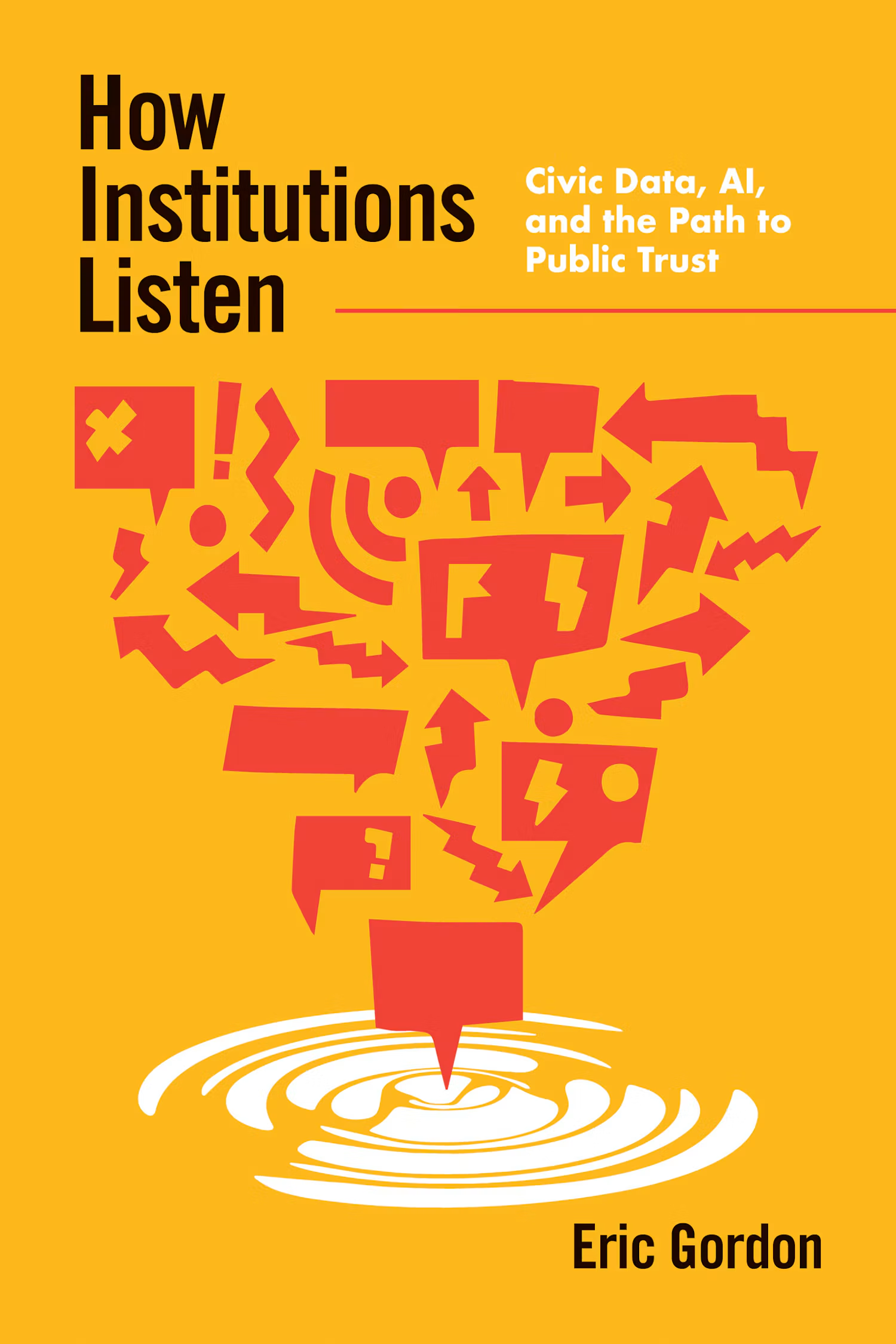
In episode 473 of The Armen Show, I speak with Eric Gordon, author of How Institutions Listen: Civic Data, AI, and the Path to Public Trust, about the relationship between public institutions, the communities they represent, and the technologies that could help improve that relationship.
Eric explains that the problem is often not a lack of public participation or good intentions among government employees. Instead, institutions frequently lack the infrastructure, incentives, and accountability mechanisms needed to turn information into better decisions. Public meetings, surveys, and consultations can become exercises in participation without producing meaningful changes.
We explore the idea of listening at scale, including why genuine listening requires institutional memory, reciprocity, and the capacity to change in response to new information. Just as people lose trust in someone who repeatedly forgets what they’ve been told, communities lose confidence in institutions that continuously ask for feedback without demonstrating that they’ve learned anything.
We also discuss how artificial intelligence could help governments make sense of large amounts of public dialogue, while raising important questions about surveillance, privacy, transparency, and the concentration of power.
Topics discussed include:
Why public participation sometimes becomes political theater rather than meaningful engagement.
The difference between collecting information and genuinely understanding and responding to people.
Why institutional memory matters for maintaining public trust.
How political incentives and bureaucratic structures prevent departments from sharing information.
The civic data pipeline: data collection, analysis, and use.
How AI can help interpret large-scale public conversations and community feedback.
The distinction between institutional listening and surveillance.
Procedural justice and why people may accept decisions they disagree with when they trust the process.
How power imbalances influence trust between governments and citizens.
The opportunities and risks of AI in public institutions, including the need for appropriate safeguards and regulation.
Eric shares several examples of these ideas in practice, including a large-scale civic imagination project in Bowling Green, Kentucky, the use of social media monitoring in Pittsburgh, Pennsylvania, and community data walks in Evanston, Illinois. These cases illustrate how data can become more useful when communities participate not only in providing information but also in interpreting it.
A central theme of our conversation is that better institutions are not simply those that gather more information, but those that can remember, understand, and act responsibly on what they learn.
The discussion connects political institutions, human communication, technological change, and democratic accountability, examining how the relationship between governments and the public might evolve as new forms of intelligence and data analysis become available.
Book:How Institutions Listen: Civic Data, AI, and the Path to Public Trust by Eric Gordon.
For episode 472 of The Armen Show, I visited Yale University for my third conversation with Professor Emily Erikson, Chair of Yale’s Department of Sociology. We explored her ongoing writing project, “Lessons in Tragedy,” which examines what ancient Greek plays can teach us about human behavior, social relationships, and the tensions that shape societies.
Drawing on her research in social networks, economic history, and social theory, Emily discusses why certain conflicts are built into human interactions and why they can often be managed but not eliminated.
Throughout our conversation, we explore:
Why negative outcomes often emerge without anyone intending harm, and how social structures can create conflict between otherwise reasonable people.
How equality and similarity in status can intensify rivalry, competition, and jealousy.
Why institutions such as juries and marriage develop to manage competing human needs and responsibilities.
How invisible personal relationships and social networks influence success, organizations, and everyday behavior.
What ancient Greek tragedies such as “Seven Against Thebes,” “The Persians,” and “The Suppliant Maidens” reveal about power, empathy, desire, and obligation.
How artificial intelligence might enhance our capabilities while potentially reducing the cognitive effort we put into thinking.
What ancient literature reveals about enduring aspects of human nature and the ways societies have progressed.
We also connect these ideas to Emily’s earlier book, “Trade and Nation,” and discuss how greater social intelligence can help us recognize unintended consequences, understand other people’s circumstances, and make more informed decisions.
The conversation moves between ancient history, contemporary social science, and everyday examples of human behavior, exploring how understanding the forces behind our interactions can lead to better ways of navigating them.
Why do good people sometimes make bad decisions? How do the pressures of work, social expectations, personal ambition, and organizational culture shape our ethical behavior? And what can we do to make better choices when our values are tested?
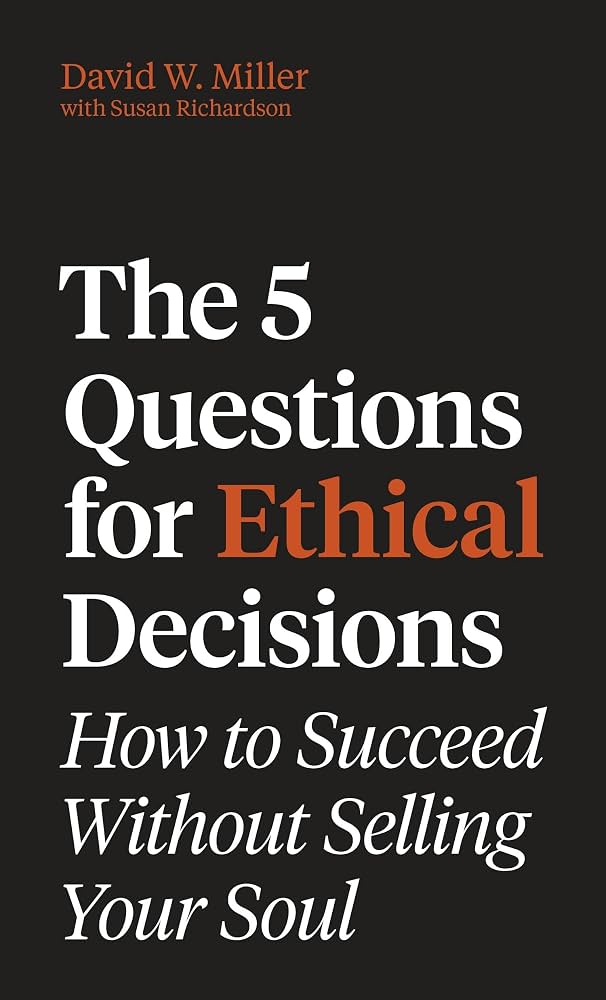
In this episode of The Armen Show, I speak with David W. Miller, PhD, director of the Faith and Work Initiative at Princeton University and co-author, with Susan Richardson, of The 5 Questions for Ethical Decisions: How to Succeed Without Selling Your Soul, published by Princeton University Press.
David brings an unusual combination of experience to the study of ethics. Before entering academia, he worked in technology, international finance, investment banking, and private equity. His interest in the relationship between professional success and personal values eventually led him to study theology and earn a PhD in ethics. His work now focuses on connecting ethical principles with the practical decisions people face in business and everyday life.
A central theme of our conversation is what David calls the “movable middle.” Most people are neither consistently virtuous nor persistently unethical. Instead, their behavior shifts in response to incentives, institutional cultures, personal circumstances, and the habits they develop over time. Even individuals with strong values can gradually compromise their standards through rationalization, performance pressure, or a desire for approval.
We explore how ethical failures emerge not only from individual character but also from the systems surrounding people. Organizational goals, financial rewards, groupthink, and leadership expectations can push otherwise reasonable individuals toward decisions they might once have rejected. David also considers why pride may be an even more dangerous influence than greed, particularly when people become invested in maintaining a public image of success.
Another important part of our discussion concerns David’s framework of the right, the good, and the fitting—three complementary lenses for approaching ethical decisions. The right considers laws, rules, and obligations. The good examines purposes, outcomes, and consequences. The fitting asks what is appropriate and virtuous in a particular situation. Looking through all three lenses can reveal blind spots that might otherwise go unnoticed.
We also discuss the role of religious traditions, family influences, historical wisdom, and personal role models in shaping moral values. David explains why understanding different ethical traditions can improve communication across cultures and help people navigate disagreements without abandoning their principles.
For moments when decisions must be made quickly, David introduces his practical Four M’s framework: Mother, Mentor, Media, and Maker. These questions encourage us to consider how people we respect, the wider public, and our deepest convictions might evaluate our choices. Even briefly stepping away from a stressful situation can create the space needed for clearer judgment.
Throughout the conversation, we return to the importance of agency, self-awareness, and long-term thinking. Ethical behavior is not simply a matter of knowing what is right. It also involves cultivating the habits, relationships, and environments that make doing the right thing more likely.
We conclude by considering a question that connects ethical decisions to the larger story of a person’s life: What will your future self thank you for doing today?
This discussion explores ethics as an ongoing process of human development, examining how we become the people we are, how our surroundings influence our choices, and how thoughtful decisions can shape the lives we ultimately lead.
Topics discussed include:
Why good people make unethical decisions
The movable middle and the influence of organizational culture
Individual responsibility versus institutional incentives
The role of pride, greed, and personal identity
The right, the good, and the fitting: three ethical lenses
Preventive, reactive, and restorative ethics
Recognizing ethical blind spots and unintended consequences
The Four M’s framework for difficult decisions
Finding moral courage and speaking up under pressure
Religious traditions and the origins of ethical values
Developing habits of ethical fitness
Making decisions with our future selves in mind
About David W. Miller
David W. Miller, PhD, is director of Princeton University’s Faith and Work Initiative, a lecturer and scholar of ethics, and an adviser to corporate leaders on organizational culture, values, and ethical decision-making. His professional background includes senior positions in international business and finance, followed by academic work in theology and ethics. He is the author of God at Work and co-author, with Susan Richardson, of The 5 Questions for Ethical Decisions: How to Succeed Without Selling Your Soul.
Book:The 5 Questions for Ethical Decisions: How to Succeed Without Selling Your Soul — David W. Miller with Susan Richardson (Princeton University Press)