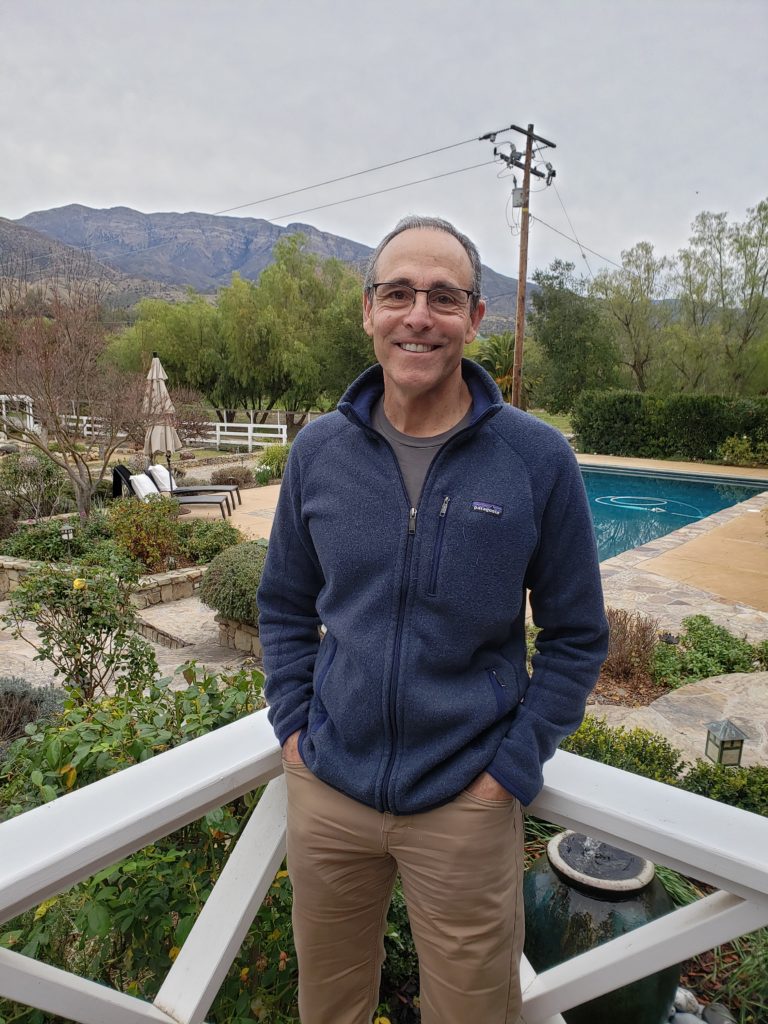
Welcome to episode 250 of the show~. This returns to the style of me speaking by myself, doing some impressions, telling some story, and updating on recent content.
There is great material to cover in March, and we look towards continued growth and improvement.
Show notes:
the interconnection between guests and episodes
using Zoom for recordings, and how it has been
the Kobe memorial, and what he represents as related to what I do
When it comes to cancer treatment, Dr. Azra Raza of the MDS Center at Columbia University has been working with patients for decades. She is an expert on myelodysplastic syndromes (MDS), which are disorders caused by poorly formed or otherwise nonfunctional blood cells, and acute myeloid leukemia (AML), which affects 1/3 of MDS patients. This type of cancer, along with the stories of many patients and the progressions of their treatment, is detailed in Dr. Raza’s book The First Cell: And the Human Costs of Pursuing Cancer to the Last.
Dr. Azra Raza is the Chan Soon-Shiong Professor of Medicine and Director of Myelodysplastic Syndrome Center at Columbia University. She has previously held positions at the Roswell Park Cancer Institute, University of Cincinnati, Rush University, and the University of Massachusetts, and has been published in numerous notable journals like The New England Journal of Medicine, Nature, Blood, and Cancer.
One of the items I found most interesting was that Dr. Raza has collected a repository of over 50000 tissue samples from MDS and acute leukemia patients, beginning in the early 1980s. We talk about this in the episode, but I find a lot of value in being the firsthand resource in some specific category or field.
Show notes:
how Dr. Raza got into her career in the first place, and specifically into the field of MDS treatment
the 50000+ patient tissue samples that Dr. Raza has collected, and what they mean to potential research that can be done today
why mouse models do not provide a good representation of how a treatment will work in people
In the Department of Biology at Miami University in Oxford, Ohio, Dr. Nicholas P. Money brings his expertise to teaching about the world of fungi/mushrooms, as well as related organisms like yeast and microbes.
In his book, The Selfish Ape: Human Nature and Our Path to Extinction, Dr. Money leads us through some of what has led humans to where they currently are, and as well, to our potential positive or negative paths down the line.
Show notes:
how Dr. Money got into mycology in the first place, and what kind of work he has done with fungi and mushrooms in recent decades
the way that fungi and mushrooms relate with the lives of humans, and what kinds of takeaways we can take from their evolution
what it means that food comes from entropy and ends with sugar
some of the evolution that has occurred in a non-linear fashion, along with features passed on for different future functions than original
information about some of the high-speed camera work Dr. Money worked on early on to see fungi releasing spores in slow detail
how we are more closely related to fungi than we are to plants or other animals
whether we have a potential good path out of upcoming extinction, due to global warming and related industrial pollution
what population growth means to the potential of human success on Earth
some of the scientists that Dr. Money liked or worked with
Episode 247 is on the scene with science journal Lydia Denworth, author of Friendship: The Evolution, Biology, and Extraordinary Power of Life’s Fundamental Bond. It covers the basis behind why we as people become friends, and how it can be so powerful. Some of the greatest things done by people came from strong friendships.
Lydia Denworth has contributed to Scientific American, and writes the ‘Brain Waves’ blog for Psychology Today. Her work is regularly across such publications as Scientific American Mind, Parents, The New York Times, The Wall Street Journal, and Bloomberg News. Regarding Friendship, Dr. Nicholas Christakis of episode 232 said “If you care about what really matters in life, read this fantastic natural history of human friendship.”
Show notes:
what led to Lydia getting into the field of science journalism
analyzing and discussing the concept of friendship
how science benefits from reaching out to other work in related fields
why friendship is the piece of the relationship story that was left out for a long time
where long-running research in field sites is done on animals like macaques to see their social patterns
how neuroscientists can see differences in brain activity in early years of a person’s life, representing rapid growth/adjustment
how empathy and theory-of-mind is developed at a certain age range
what macaques do to subjugate other ones, and how stress responses are a part of the social win/loss paradigm
the way that public speaking or math can be used to examine stress level
what loneliness represents about the person in that position, regarding their mental health
the lunch time that exists in middle school, and what it represents for socialization and internal battles
some of the illumination on women in science in the book, as well as one way that expanded a direction of research
the types of friendships that are more valuable in the long-term, and how many close friends the average person has
how there needs to be back-and-forth in a successful long-term friendship
what face-to-face interaction means for friendship and its growth
When it comes to sustainable energy solutions, Larry Rogero has been implementing them for corporations for decades. I first met Larry through his wife Christel, who is my friend and mother of episode 208 guest nutritionist Erika Stowe-Madison. Larry brings a focus and deliberation to what he does that is necessary for long-lasting results.
Larry is Chief Operating and Strategy Officer at Summit Inspection Services, and has worked in environmental affairs for decades. He got his Masters in Environment Management at Yale University, and his Bachelors in Biological Sciences from my institution of higher learning, UC Santa Barbara.
Show notes:
a superb intro by Christel
what led Larry into the field of environmental concern in the first place
how wind power has been used in recent years, and where it is going in coming years
the ways that Larry has contributed to his organization, and what it takes to get a wind power project in place and going
some of the issues with installing wind turbines in new places
environmental concerns in coming years, and the amount of renewable energy we currently have in place
a reverse interview with Larry asking me many questions about the show and my ideas behind it
books read by both of us, and people we both look to as representative people to check out or follow
and much more
It was great to have Larry on the show, and it was neat to explore his methodical nature that he has displayed in his field for decades.
We dive into the collective consciousness of humans on episode 245 with Dr. Sarah Rose Cavanagh, author of “Hivemind”. The book takes us through how group elements and stories spread among people, the ways that people can build each other up or tear each other down via the internet, vulnerabilities of certain groups of people, and lessons for people to take through their days.
Dr. Cavanagh is Associate Professor of Psychology at Assumption College, and got her PhD in Experimental Psychology from Tufts University. Her research is on how patterns of emotional reactivity illuminates trajectories of risk and resilience in individuals.
Show notes:
how Dr. Cavanagh got into psychology in the first place
the way that elements can spread from group to group
what the hivemind represents, and how we operate as a collective consciousness
the way that stories can propel a fiction or nonfiction from a small form to a societal belief
the impact that online frameworks have had on people, whether to build them up or tear them down
who is most vulnerable to manipulation due to their current life condition and physiology
how many are walking through life in the form of a constant form of minor fight-or-flight response
a lesson about how serendipity can be built or supported in one’s existence
Our first guest of 2020 is Dr. Scott Grafton, Bedrosian Coyne Presidential Chair in Neuroscience at the University of California, Santa Barbara. He is author of the book Physical Intelligence: The Science of How the Body and the Mind Guide Each Other Through Life.
It was great to talk with Dr. Grafton because his book connected with some concepts from some authors/researchers in past episodes, and described a way of thinking about the physical element of intelligence, and how our motor function is connected with our layers of brain processing. I also went to UCSB, and that is a nice point of similarity.
Dr. Grafton is director of the UCSB Brain Imaging Center and codirector of the Institute for Collaborative Biotechnologies. He received BA’s in Mathematics and Psychobiology from the University of California at Santa Cruz and his MD degree from the University of Southern California.
Show notes:
brain scans and positron emission tomography (PET) for understanding of brain function
Dr. Grafton’s career, and what led him to brain and motor function research
running the brain imaging center, and how imaging has developed in recent years
where all the action in the brain is located
visual perception, and how the percentage of vision someone gives to an object relates to its importance in a broad perspective
how it is difficult to maneuver over rocks, and to create robots that would walk across rough rocks
body schema, as it compares with attention schema theory, for physical sensation
the way that practicing something in your mind connects with ability to do the motor action
how the brain creates synergies of muscle movements
how babies have plasticity, and take risks in order to understand their physical environment from scratch
how nature serves as a medicine to people and their well-being
the way that entropy is key to a healthy life, and how one does not benefit from distancing from entropic conditions
Hello my fellow podcast listeners, associates, colleagues, individuals, audience members, and personnel. We here at The Armen Show Podcast (known for its consistency, variety, depth, and goal-oriented nature) are glad to walk right into the new year of 2020.
The show starts on a noticeably different footing as compared with its presence at the same time last year, and this is a springboard into the forward progression at hand.
Show notes:
where we are at in the great year of 2020
how TikTok is the place where a lot of energy is currently going
some of the plans or ideas for 2020
speaking or some form of speech-providing
ways I can improve my end of the show throughout the year
emotional awareness and better blending with guests
telling more stories, and including more of my own experiences, along with mentions of past guests
how I will be including more elements without thinking if X or Y or Z is the right thing to add in
how I will be looking at other podcasters/creators to see what I can add in or improve upon
what the podcast represents and is meant to express
Keep up with the show and you are keeping up with the movement. Let’s roll onward.
Long live the year, the decade, and the dynamics that have progressed over time. This episode is me closing out the decade with some descriptions of my content creation over time, what I have noticed of the internet as it shifted over the years, and what changes I have seen in the planet in the past decade.
I like to do recaps and compilations to get a broader sense of what has happened. We can only see so much from a smaller view, but I don’t like to stick with that view. The bigger picture is the world I like to inhabit, and at times, I share that with you.
Show notes:
progression of my social media content over the years
my blog Timeless Information and its various contents
YouTube videos with strangers in public
SnapChat themes across different messages
Podcast audios and shared insights
TikTok clips of insights, or shared with strangers
the development of the internet over the past 10 years
what people have used and shifted toward
some global dynamics I have noticed
what cultures have more recently gone online in big numbers
what I have liked to do
Glad to have you all on the show in these times. We progress to the next decade in smooth fashion, and there is a world of opportunity for those who seek it out. To more great things~
The year of 2019 is shortly coming to a close, and we start to bring it home with episode 241, featuring guest Dr. Brian Sweis of the University of Minnesota. He was listed as one of the recipients of the Forbes 30-under-30 description in the category of Science for 2019, and his focus is neuroscience.
He completed the PhD part of his MD/PhD program in 2018, and continues through his MD at this time. His research exists “…at the intersection of affective, behavioral, and cognitive neuroscience and clinical psychiatry and neurology, particularly focused on neuromodulation interventions.” The work he does “… aims to understand how the brain processes information during decision-making and how lasting changes in the synaptic mechanisms of plasticity, particularly in the context of addiction and other psychiatric disorders, give rise to maladaptive behaviors.”
Show notes:
how Dr. Sweis got to where he is in the MD/PhD neuroscience program at the University of Minnesota
why is it relevant that one study the intersection of multiple fields like affective, cognitive, and behavioral science, along with neurology and neuroeconomics
what some of Dr. Sweis’ work on neuromodulation efforts looks like in terms of description and example
how there are biomarkers that are more or less reliable than others to inform researchers of an attribute in place
why decisions are multi-faceted, and can arise from distinct circuit-specific neural computations
the difference between decisions made from an emotional standpoint, versus from a logical basis, and how each can be beneficial in different scenarios
the kinds of animal and human trials that are done to research how the brain is impacted, and what kinds Dr. Sweis performs
what it means to look at decision-making in a neuroeconomic way, assessing comparative values to choices
how disorders can alter how stored information is processed
some of the scientists and advisors along the way that have guided or informed Dr. Sweis, along with the reasons why
I can see why Dr. Sweis was selected for the Forbes designation, and enjoyed discussing with him while he currently is in a study program. He has long-term goals for research, teaching, and medical work, which is a full-throttle set of items. Some of his research application qualities remind me of Dr. Daniel Z. Lieberman from episode 201, who discussed his research on dopamine. Dr. Sweis also mentioned my interview with Dr. Robert Sapolsky in this episode, and I have always liked Dr. Sapolsky’s book Behave.