Author: zapzimzod

  • 469: AI, Journals, Research, and Better Systems

    In episode 469 of The Armen Show, I talk through some of the ways I’m using AI and other new tools in 2026, and what becomes possible when these technologies are applied to years of accumulated information, projects, and experience.

    One of the main examples is my journal archive. I’ve been keeping electronic journals going back more than a decade, with my more recent material in Notion. Until recently, there was no practical way I was going to reread hundreds or thousands of entries and systematically extract patterns from them. Now AI can go through years of journals and help identify what actually worked, what repeatedly didn’t work, which projects remained open-ended, which people and places kept appearing, and what conditions were associated with making real progress.

    That changes the value of keeping information. Saving something is useful, but saving it and then being able to analyze it years later is much more powerful.

    I also get into the growing role of AI agents and tools that can increasingly do the searching, sorting, organizing, and analysis themselves. Rather than learning elaborate ways of communicating with computers, the longer-term direction should be toward systems that understand ordinary communication and handle more of the intermediate work for us.

    Another example is research organization. I’ve been moving papers into Zotero, where PDFs, titles, authors, metadata, and collections become much easier to navigate. Having a well-organized body of research changes what you can do with it later. The same principle applies to journals, computer files, books, podcast episodes, and other collections: once there is enough accumulated material and enough structure around it, the collection itself becomes a resource for future work.

    A broader theme running through the episode is compounding. A small improvement in how you organize information, use technology, communicate, or structure your work can save time or create opportunities later. Then the next improvement builds on that one. Over months and years, those differences can become substantial.

    Toward the end of the episode, I look at a few research ideas as well, including the illusion of moral decline, which is the recurring tendency for people to believe society has become less moral even though generations have repeatedly reported the same decline, and the related tendency to remember the music, culture, and experiences of earlier periods of our own lives as unusually good.

    The larger question is what we can do now that we simply could not do before. The technology already available in 2026 creates an unusually large opportunity to revisit old information, organize existing work, discover patterns, and spend more time on the things that actually matter.

    Topics

    • Using AI to analyze years of personal journals
    • Finding patterns in what works and what doesn’t
    • ChatGPT, Notion AI, and agentic tools
    • Organizing research papers with Zotero
    • The compounding effect of better systems
    • Why trying new technology matters
    • Building useful collections of work over time
    • The illusion of moral decline
    • Why people often think the past was better

    Timestamps

    00:00 – Episode 469: Technology in 2026
    01:25 – Why AI Is a Huge Opportunity Right Now
    02:35 – Using AI to Analyze Six Years of Journals
    03:03 – What My Journals Revealed About What Works
    04:20 – Why Open-Ended Projects Often Fail
    05:16 – Finding People and Priorities in Your Past Notes
    06:38 – Why Saving Information Isn’t Enough
    07:15 – Why I Like Comprehensive Books
    08:17 – When Unfinished Projects Come Back Around
    08:54 – Finding the Best Research Papers With AI
    10:18 – Why Research Takes Years to Become Practical
    11:01 – My Concept-by-Concept Thinking Style
    12:48 – Why AI Agents Are Growing So Fast
    13:45 – AI Should Eventually Understand Normal Communication
    14:32 – Why Defend Work You Never Wanted to Do?
    15:24 – Why the Public Reaction to AI Has Been So Mixed
    16:16 – Trying New Tools and Features
    18:42 – Inside My AI Journal Analysis
    20:10 – Using AI to Organize Messy Computer Files
    21:59 – How Small Improvements Compound
    23:27 – Spending More Time on What Actually Matters
    24:24 – Building a 13-Year Journal Corpus
    25:31 – Using Zotero to Organize Research Papers
    26:30 – How Zotero Organizes PDFs and Metadata
    27:24 – The Hidden Cost of Extrinsic Goals
    28:27 – Why the Best Papers, Articles, and Books Matter
    29:12 – AI Daily Briefs and Personal Assistants
    30:41 – Riverside and Building a Body of Work
    31:37 – Why a Large Body of Work Creates New Possibilities
    34:00 – The Illusion of Moral Decline
    36:11 – Why We Think the Music of Our Youth Was Better
    37:39 – Closing Thoughts on AI and Technology

  • 468: Sukun Chopra | Finding Your Way Again: Purpose, Connection, and Life After Momentum

    Sukun Chopra returns to The Armen Show for a conversation about identity, purpose, connection, and rebuilding momentum after major life transitions.

    Since her first appearance on the show, Sukun has gotten married, moved from Delhi to London, stepped away from her podcast Epic Beings, and experienced the loss of her grandmother shortly before her wedding. We explore what happens when familiar routines disappear, how people rediscover meaning after disruption, and why self-awareness remains one of the most important qualities for personal growth and relationships.

    The discussion covers resilience, grief, conscious relationships, loneliness, belonging, curiosity, AI as a tool for reflection, and the challenge of maintaining genuine human connection in an increasingly filtered and performative world.

    Rather than a conversation about productivity, this is a conversation about understanding yourself, rebuilding from change, and creating a life aligned with your values.

    Topics include:

    • Marriage and major life transitions
    • Moving from Delhi to London
    • Losing and rebuilding momentum
    • Self-awareness and conscious relationships
    • Curiosity, empathy, and human connection
    • Loneliness in the digital age
    • AI for reflection and self-discovery
    • Grief and the loss of a loved one
    • Psychological safety and belonging
    • Purpose, identity, and personal growth
  • 467: Danny Bate | Why the Alphabet Endures: A Deep Dive into Language and Culture

    Why did the alphabet become one of humanity’s most successful technologies?

    In this episode, Armen speaks with linguist and author Danny Bate about the hidden history of letters, writing systems, speech, and the strange relationship between language and civilization itself.

    The conversation begins with a deceptively simple question: why devote years of study to the alphabet? From there, the discussion expands into historical linguistics, the evolution of writing systems, the psychology of speech, and the role language plays in identity, hierarchy, memory, and human cooperation.

    Danny explains how the alphabet emerged from earlier systems like Egyptian hieroglyphs and cuneiform, why writing is fundamentally separate from speech, and how modern literacy changes the way humans think about language. The discussion also explores why irrational systems survive for centuries, how prestige shapes “correct” speech, and why spelling standards are often more political than linguistic.

    Armen and Danny examine how writing systems evolve over time, how languages influence one another across civilizations, and how tiny historical documents can reveal enormous insights about the past. One major focus is an ancient Armenian papyrus written in Armenian letters but containing Greek words — a document that reveals not only cultural exchange, but also clues about how spoken Greek actually sounded nearly two thousand years ago.

    Other topics include:

    • Why speech is older than writing
    • The difference between spoken language and written symbols
    • How accents evolve across generations
    • Why English spelling became so irregular
    • The role of social hierarchy in “correct” language
    • Linguistics as a form of pattern recognition
    • Whether humans would invent writing differently today
    • Why language change is inevitable
    • The relationship between language, identity, and power
    • How adult language learning differs neurologically from childhood acquisition
    • Why writing endures while speech disappears
    • The emotional experience of publishing a book

    Throughout the episode, Danny approaches linguistics not as isolated technical analysis, but as a living record of human behavior, migration, cooperation, and creativity.

    The discussion also touches on Armenian linguistic history, Indo-European languages, Greek transcription systems, Semitic writing traditions, and the way scripts preserve traces of civilizations long after empires disappear.

    This conversation is less about memorizing linguistic facts and more about seeing language differently: not as a static system, but as an evolving human process shaped by time, geography, power, adaptation, and culture.

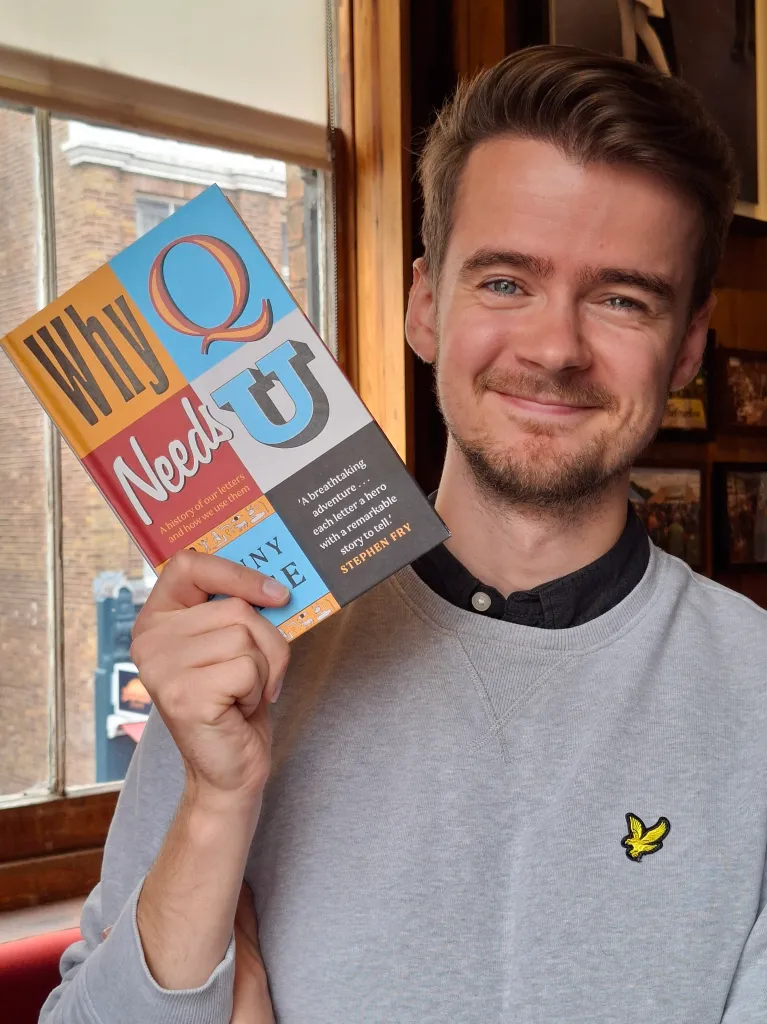
    Danny Bate is a linguist and author specializing in historical linguistics, writing systems, and the history of the alphabet. His book Why Q Needs U explores the origins and evolution of letters from ancient civilizations to the modern world.

  • 466: Jacob Mchangama | The Free Speech Recession: A Global Decline in Expression

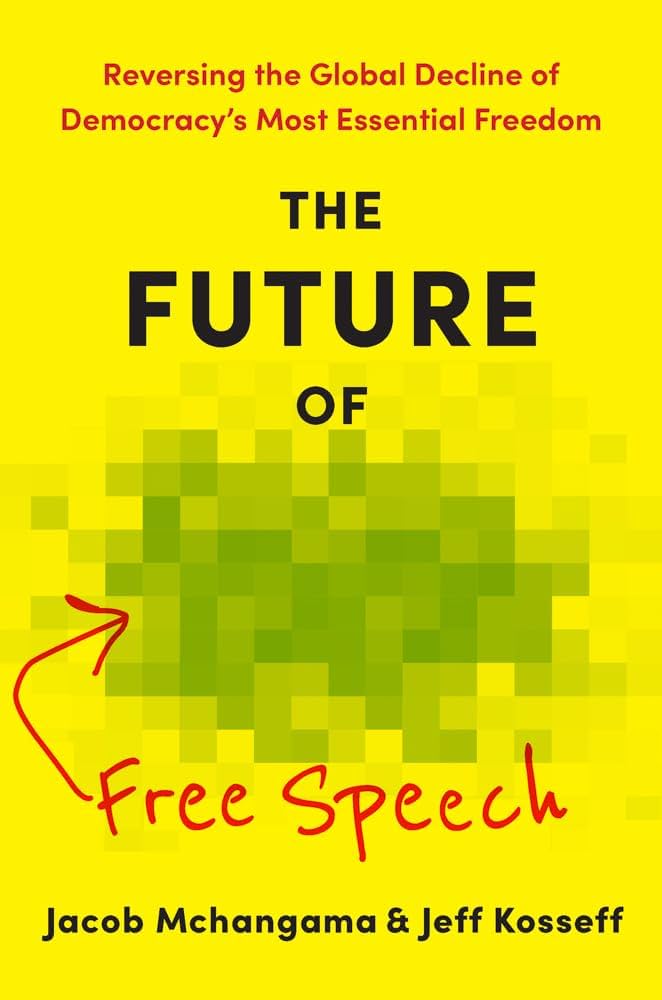
    In this episode, Armen speaks with legal scholar and free speech advocate Jacob Mchangama about the shifting global landscape of expression. Drawing on his new book The Future of Free Speech, Mchangama outlines a central claim: we are in the middle of a “free speech recession,” where both democratic and authoritarian systems are increasingly restricting speech, often for different reasons, but with converging effects.

    The conversation traces how early optimism about the internet as a tool for openness has given way to a more controlled and centralized environment. Governments now exert pressure on digital platforms, while large tech companies function as de facto gatekeepers of public discourse. At the same time, authoritarian regimes have adapted technology to strengthen censorship and surveillance, creating a more coordinated global push against open expression.

    Mchangama highlights the historical foundations of free speech, including post–World War II debates over misinformation and the evolution of U.S. First Amendment doctrine through controversial cases. These examples show how strong protections were often built by defending unpopular speech, with long-term implications for minority rights and democratic resilience.

    The discussion also explores modern tensions: misinformation vs. overreach, public platforms vs. private control, and the psychological pull toward restricting speech during moments of crisis. Mchangama argues that top-down control, whether through governments or platforms, often produces second-order effects, including suppression of dissent and erosion of trust.

    Possible paths forward include anti-SLAPP laws to protect critics, decentralized platform models, radical transparency, and emerging tools like crowdsourced fact-checking. Underlying all of these is a broader claim: legal protections depend on a culture that values open expression, even when it is uncomfortable.

    The episode frames free speech not as an abstract ideal, but as an evolving system shaped by incentives, institutions, and human behavior, such that it requires active maintenance to preserve its benefits.

    Jacob Jomo Danstrøm Mchangama is a Danish lawyer, human-rights advocate, and public commentator. He is the founder and director of Justitia, a Copenhagen-based think tank focusing on human rights, freedom of speech, and the rule of law. For six years, he served as chief legal counsel at CEPOS.

  • 465: Michael Gurven | The Seven-Decade Human Lifespan

    A conversation with Professor Michael Gurven of UC Santa Barbara on the evolutionary structure of human lifespan and the misconceptions surrounding aging.

    The central claim of Gurven’s work is that humans were not “designed” for short lives that modern medicine has recently extended. Rather, the capacity to live roughly seven decades has long been part of our species’ biological design, conditional on surviving early-life risks.

    This reframing shifts the discussion from “why are we living so long now?” to “what has always been possible, and under what conditions?”

    The discussion develops across five themes:

    1. Lifespan vs. Life Expectancy
    Average life expectancy in the past was low primarily due to early mortality. Once individuals reached adulthood, living into later decades was common, not exceptional.

    2. Why Aging Exists
    Aging is not an adaptive trait but a byproduct of evolutionary tradeoffs:

    • Early-life advantages outweigh late-life costs
    • Natural selection weakens with age
    • Resources are allocated to reproduction over indefinite repair

    This produces aging as a structural outcome rather than a correctable flaw.

    3. Limits of Modern Longevity Thinking
    Efforts to “cure aging” often focus on individual mechanisms (genes, cells, diseases), but aging operates across integrated biological systems. Eliminating specific diseases does not remove the underlying aging process, but only shifts its expression.

    4. Function vs. Chronological Age
    Across cultures, aging is not primarily defined by number of years but by functional decline, based on what one can no longer do. This provides a more grounded model of aging than numerical age categories.

    5. Cooperation and Longevity
    Human lifespan is inseparable from social structure. Cooperation, food sharing, and interdependence are not peripheral, but they are foundational to reaching older ages in the first place.

    —

    This episode integrates evolutionary theory, anthropology, and modern health discourse into a single model: aging is not a recent problem to solve, but a long-standing feature of human design with identifiable constraints and tradeoffs.

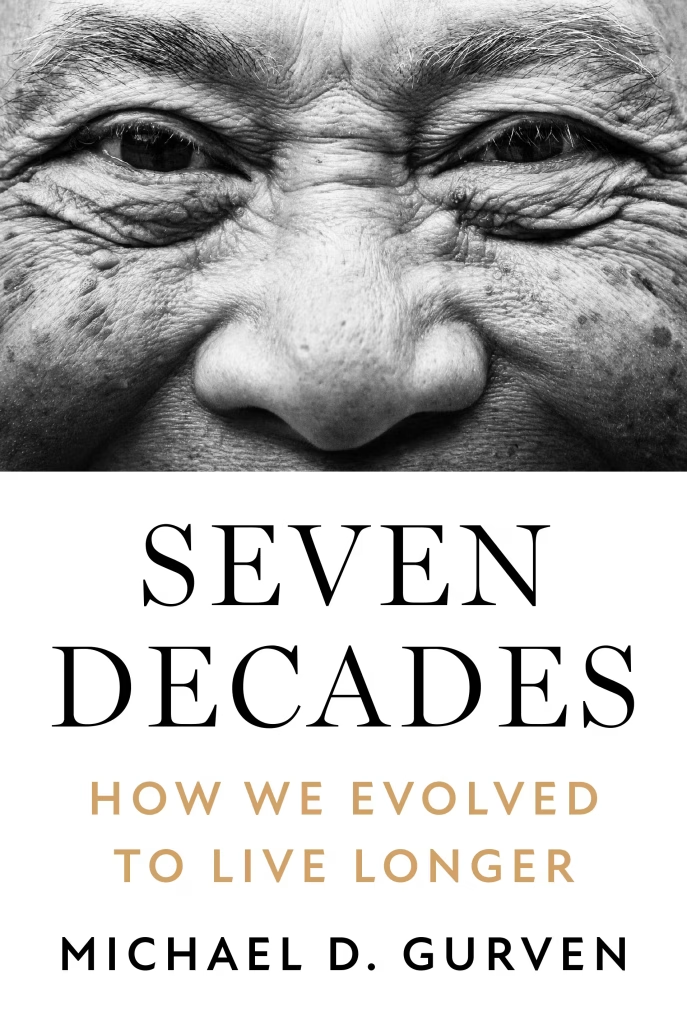
    Professor Michael Gurven is an evolutionary anthropologist whose research connects human lifespan, health, and behavior to our species’ cooperative social structure. He has conducted over two decades of fieldwork with indigenous populations in South America and co-directs the Tsimane’ Health and Life History Project, which examines how environment and lifestyle shape health and aging in subsistence societies. His work applies an evolutionary perspective to modern diseases and focuses on how social and environmental factors, including acculturation and market integration, affect development, aging, and chronic disease risk across the lifespan.

    Watch or listen to the full conversation below.

  • 464: Carey Gillam | How Industry Manipulates Science and Regulation

    In this returning conversation, investigative journalist Carey Gillam examines how scientific evidence, corporate incentives, and regulatory systems interact in the modern agrochemical landscape. Drawing on more than three decades of reporting, she traces the evolution of glyphosate from a widely adopted agricultural tool to a focal point of global health debate.

    The discussion centers on a recurring pattern: how safety narratives are constructed, contested, and institutionalized. Internal documents, litigation discovery, and independent research create parallel streams of evidence, often leading to different conclusions about risk. Gillam describes how companies respond when unfavorable findings emerge, including strategies such as shaping research pipelines, coordinating third-party validators, and managing public perception.

    A key structural tension emerges between independence and funding. Much of the research required for regulatory approval is financed by the companies themselves, creating inherent incentives that complicate interpretation. Attempts to solve this through independent funding models remain limited, leaving regulators to adjudicate between conflicting bodies of evidence.

    The conversation extends beyond glyphosate to newer cases such as paraquat and Parkinson’s disease, where similar dynamics appear: early internal awareness, external scientific signals, and legal processes that ultimately surface information not easily accessible through regulatory channels. Courts, rather than agencies, often become the primary mechanism through which internal company records enter public view.

    More broadly, this episode examines:

    • How a chemical moves from controversial to “officially safe”
    • Why industry-linked studies and independent research diverge
    • The role of regulatory capture and institutional constraints
    • The emergence of a “playbook” for managing scientific doubt
    • The declining capacity of media systems to cover complex scientific disputes

    At a higher level, the discussion is about epistemic structure: how societies decide what counts as reliable knowledge when incentives are misaligned. The result is not a single conclusion, but a framework for evaluating claims, sources, and the systems that produce them.

    Gillam closes with a practical emphasis: sustained attention, critical thinking, and engagement remain necessary conditions for navigating environments where information is abundant but not uniformly trustworthy.

  • 463: Bronwyn Williams | Surviving the AI Apocalypse: A Solutionist’s Guide

    Bronwyn Williams discusses the concept of the ‘AI apocalypse’ and the broader technological and geopolitical shifts impacting society. The conversation explores how globalization, automation, and the concentration of wealth influence individual value, job security, and societal structures, offering practical insights for survival and adaptation.

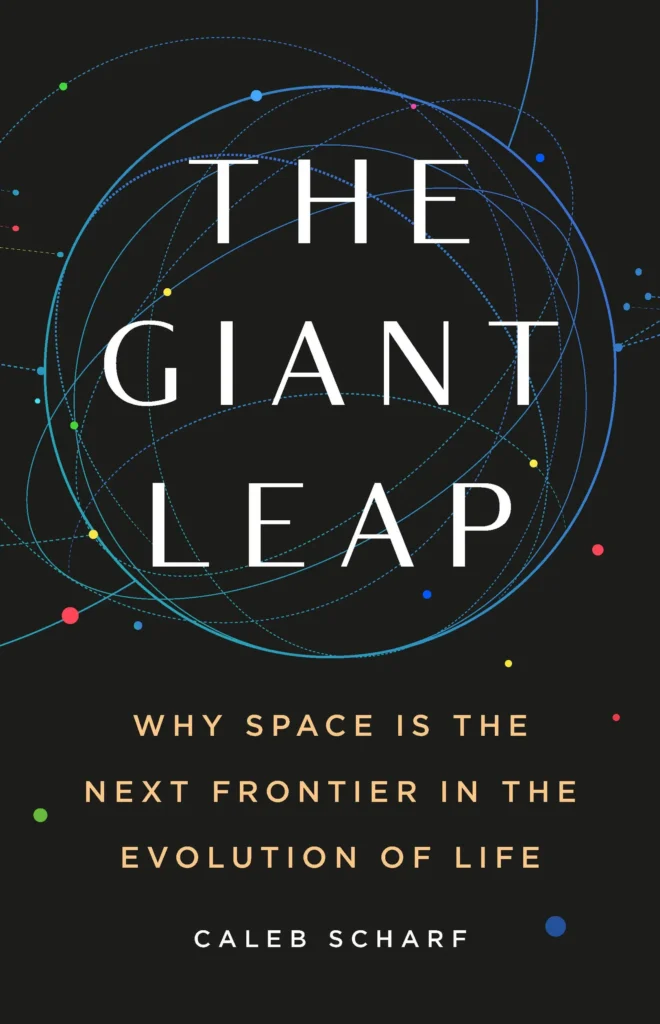
  • 462: Caleb Scharf | The Biological Imperative of Space Exploration In “The Giant Leap”

    In this episode, Dr. Caleb Scharf returns to the show, where we discuss his book The Giant Leap: Why Space Is the Next Frontier in the Evolution of Life, exploring the intersection of biology, technology, and space exploration. He argues that space travel is not merely a technological endeavor but a biological phenomenon that reflects the evolution of life on Earth.

    The conversation delves into thermodynamics, the role of abstract thought in enabling space exploration, and the ethical considerations of human expansion into space. Scharf emphasizes the importance of understanding our place in the cosmos and the potential for life to evolve beyond Earth.

    Conversation Map

    Introduction to space exploration and astrobiology
    The discussion begins with how astrobiology reframes space exploration: not as engineering expansion, but as a biological question about where life can exist and how we would recognize it.

    The biological perspective on space travel
    Spaceflight is reconsidered from the standpoint of organisms rather than rockets – what environments bodies require, what constraints biology imposes, and why most of the difficulty of space travel is physiological rather than mechanical.

    Thermodynamics and the nature of life
    Living systems are examined as thermodynamic processes: organized structures sustained by continuous energy flow rather than static objects.

    Entropy and life’s counterforces
    Life does not violate entropy; it locally resists disorder by exporting it outward. This provides a framework for detecting life elsewhere by identifying energy gradients being actively exploited.

    The evolution of technology and intelligence
    Technology is treated as a continuation of evolution – an externalized adaptation system allowing intelligence to modify environments instead of adapting bodies.

    The role of abstract thought in space exploration
    Abstract reasoning enables long-horizon planning, making space exploration possible before it is practical. The idea precedes the capability.

    The challenges of becoming a multi-planet species
    Colonization is not mainly a transportation problem but a systems problem involving ecosystems, radiation exposure, reproduction, and long-term viability.

    The future of robotic exploration
    Robots may be the natural first explorers because machines tolerate environments that biological organisms cannot, changing what “exploration” means.

    The possibility of machine life on Mars
    A speculative scenario: self-replicating or adaptive machines could become a new evolutionary lineage, blurring the distinction between biological and technological life.

    Changing perspectives on exploration
    Space exploration shifts from heroic travel narratives to questions about information gathering, sensing, and remote presence.

    Contamination and Earth’s microbial legacy
    Sending probes risks exporting terrestrial microbes, complicating the search for indigenous life and potentially altering extraterrestrial ecosystems.

    Ethics of colonization
    Whether humans should settle other worlds depends on how we value non-Earth life and whether preservation or expansion takes priority.

    Human society in space
    Long-term habitation raises social and political questions: governance, isolation, cooperation, and cultural evolution in constrained environments.

    Technological vs. Darwinian evolution
    Biological evolution operates slowly through selection, while technological evolution changes environments rapidly; the interaction between the two shapes humanity’s future.

    Effects of space exploration on Earth
    Exploration feeds back into terrestrial life through technology, perspective shifts, and changes in how humanity understands its place in the universe.

    Agriculture vs. rocketry
    Historically, agriculture transformed civilization more than transportation technologies. The conversation closes by comparing foundational innovations to question whether spaceflight will be similarly transformative.

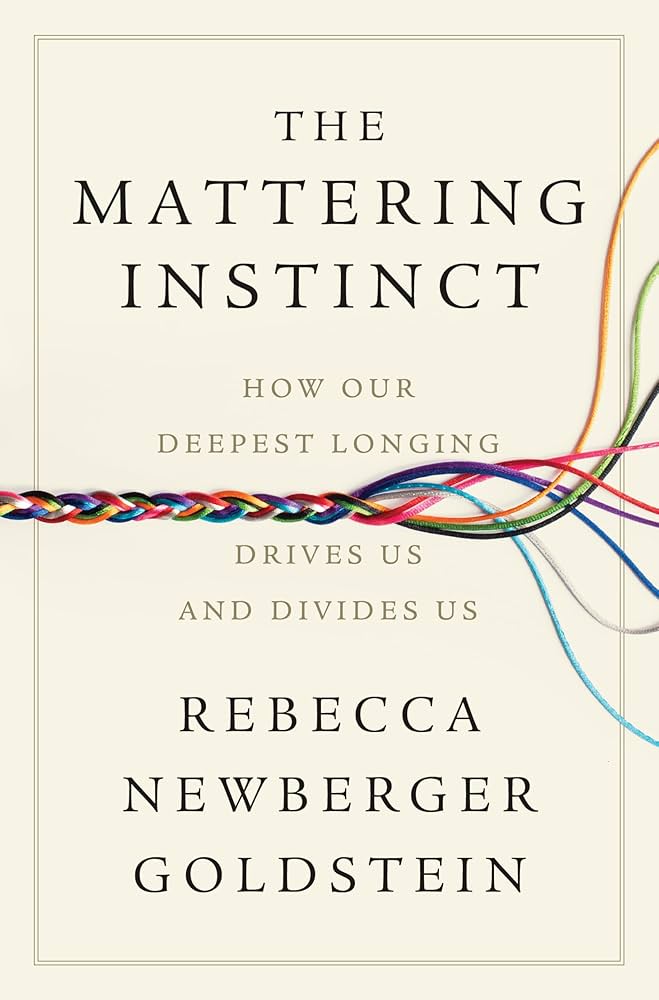
  • 461: Rebecca Newberger Goldstein | Exploring the Nature of Mattering In “The Mattering Instinct”

    In this conversation, Armen Shirvanian and Dr. Rebecca Newberger Goldstein explore the concept of ‘mattering’, the intrinsic human desire to feel significant and valued, from her book The Mattering Instinct. They discuss the challenges of self-identity in a commodified world, the importance of social connections, and the various strategies individuals employ to find meaning in their lives.

    Goldstein introduces her ‘mattering map,’ which categorizes different approaches to mattering, and emphasizes the need for genuine connections that foster creativity and personal growth. The conversation also touches on the philosophical implications of mattering, the role of entropy in our lives, and the moral responsibilities that come with our quest for significance.

  • 460: Where Trust Goes When Institutions Fail

    In this episode, Armen Shirvanian explores the shifting landscape of trust as institutions face increasing scrutiny and failure. He discusses how trust is transitioning from traditional institutions to individuals and networks, emphasizing the importance of personal integrity, competence, and the role of data in shaping perceptions of trust.

    The conversation delves into the implications of AI in trust dynamics, the erosion of faith in political systems, and the emergence of local legitimacy as a response to institutional failure. Shirvanian highlights the need for transparency, principles, and joint truth-seeking as essential components in building trust in the modern world.