Category: Interviews

  • 211: Mimmy Loftin | Views On Love And Sexuality For Teens And Tweens In “Your Body Is A Gift”

    We bring a variety of perspectives to The Armen Show podcast, and this episode is no exception. Guest Mimmy Loftin is author of an upcoming book about sexuality, love, and relationships.

    I always like to support creators doing their thing, because they are able to reach out to someone who meshes well with them.

    In this episode, we discussed:

    • sections of her book, from the broad to the narrow to the self-focused
    • ways that consistent use of pornography during formative teenage years impacts future ability to connect
    • conquest philosophy and how it has limiting features
    • the ways that sex has developed over recent decades in the media

  • 208: Erika Stowe-Madison | Nutrition, Vulnerability, Stories, And Perspectives

    Nutrition and health are two cornerstones of a good existence. Episode 208 of the show comes with guest Erika Stowe-Madison, who I have known for many years. Erika is a grad student in a Nutrition Masters program in Seattle, Washington.

    We discussed many topics, including:

    • nutrition and the items that Erika is working on, including a community assessment project
    • some of the background behind how we know each other
    • vulnerability and the power of releasing your emotion or affected self out into the world, as similarly described by Brene Brown
    • stories from my recent happenings, as well as some local stories of note
    • snowmaggedon in Seattle, and snowboarding which was done by us
    • what it takes to reach the point where you are on the border of improving or upgrading your abilities

    Glad to have Erika on the show, and let’s continue to more great material

  • 207: Carl Zimmer | Science Writing, Evolution Through Time, And His “What Is Life” Podcast

    Prolific science writing in the topics of evolution, parasites, and the brain is the domain of author and New York Times columnist Carl Zimmer, who joins us on episode 207 of the show.

    Carl Zimmer reports from the frontiers of biology, where scientists are expanding our understanding of life. Since 2004 he has written about science for the New York Times, where his column “Matter” has appeared weekly since 2013. He is a popular speaker at universities, medical schools, museums, and festivals, and he is also a frequent on radio programs such as Radiolab and This American Life.

    Zimmer’s career began at Discover, where he went on to serve for five years as a senior editor. In addition to his work for the New York Times, he has written  articles for magazines including National Geographic, Wired, and The Atlantic. Zimmer is the author of thirteen books about science. His latest is She Has Her Mother’s Laugh: The Power, Perversions, and Potential of Heredity.

    In this episode, we discussed:

    • Carl’s career and what led up to his current position as author and writer
    • his new podcast titled “What Is Life?”, involving numerous scientists and individuals with perspectives on the matter
    • specific episode topics and guests which were part of the set
    • how physicist/astrobiologist Sara Walker from ASU said we should think that aliens may not introduce themselves so we need to understand how to reach out
    • Professor Jim Cleaves point that there were not big efforts to find the origin of life 200 years ago
    • Jeremy England of physics at MIT, and his view of life as a way to dissipate energy, related to entropy theory
    • Steven Benner, scientist at the Foundation for Applied Molecular Evolution, and his view that life wouldn’t need to be RNA, DNA, or carbon-based like we are
    • Kate Adamala, chemist at University of Minnesota, and her interest in building a synthetic cell at her protobiology lab
    • how Carl formulated his book She Has Her Mother’s Laugh
    • Carl’s experience writing a column for The New York Times
    • why risk-taking is necessary to not remain at a plateau point

    I was glad to have Carl on the show. You can check him out on Twitter @carlzimmer, take a look at his new podcast What Is Life?, or check out his book She Has Her Mother’s Laugh on Amazon.

  • 206: Alan Jasanoff | The Connection Between Brain And Body, And More From “The Biological Mind”

    The connection between the brain, body, and mind is the connection between the subunits of our living world. Professor Alan Jasanoff, director of the Center for Neurobiological Engineering at MIT, explored this topic in his book The Biological Mind.

    Professor Jasanoff obtained his Bachelor’s Degree in Biochemical Sciences at Harvard College. After completing his Masters in Chemistry at the University of Cambridge, UK, he returned to Harvard University to commit to his PhD studies in Biophysics. Jasanoff joined the faculty of the Department of Biological Engineering at MIT in 2004.

    In my episode with Professor Jasanoff, we discussed:

    • his career and the steps that led him to where he is
    • the philosophy of neuroscience, and the reductionist mindset
    • the use of fMRI for brain imaging and understanding of the pathways
    • some of the analogs between a brain and a computer
    • how the external world is linked to the internal
    • ways that imaging has changed in the field in recent years
    • how parts of the brain are activated by emotions, but are not the only regions involved in such activity
    • the way that emotions light up sensations throughout the body
    • how the processes performed by the brain are connected to stimuli
    • scientists keeping track of the current research in their industry

    Glad to have Professor Jasanoff on the show. You can check out his faculty page, look at his PubMed Publications list, or check out The Biological Mind on Amazon.

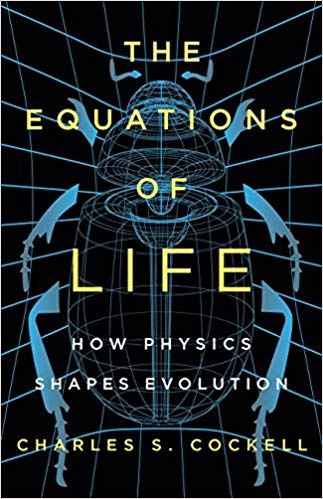
  • 205: Charles S. Cockell | Astrobiology, And How Physics Shapes Evolution, In “The Equations of Life”

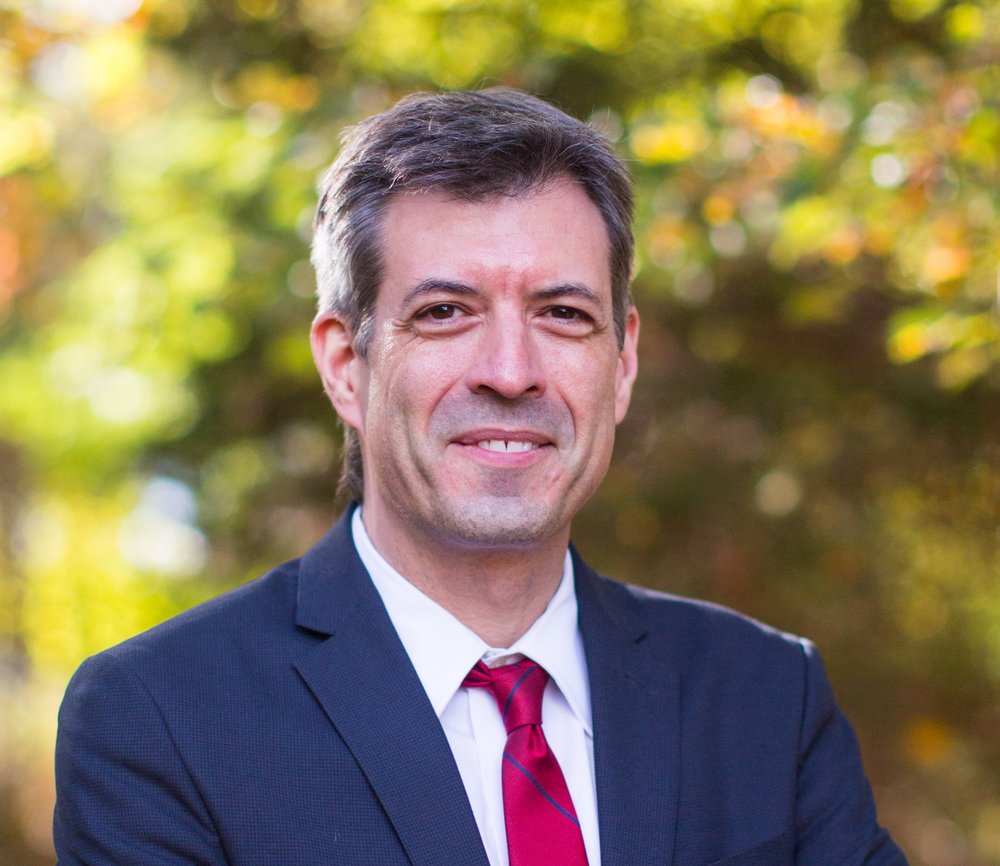
    Biology will reach out to the endless openness, but it will be limited and managed by physics and the equations that govern our universe. In this episode, we discuss with Professor Charles S. Cockell of the University of Edinburgh about topics in his book The Equations of Life.

    Before Professor Cockell taught in the School of Physics and Astronomy at the University of Edinburgh, he was a Professor of Geomicrobiology and microbiologist with the British Antarctic Survey in Cambridge. He got his doctorate in Molecular Biophysics at Oxford University, and has published over 300 scientific papers in the categories of astrobiology, geomicrobiology, and life in extreme environments. As well, he has contributed to plans for Mars exploration.

    In my episode with Professor Cockell, we discussed:

    • Professor Cockell’s fascination with space and biology
    • the progression he made in his career to the University of Edinburgh
    • what kind of research he performed in his time at the Antarctic
    • examining life at the boundaries of what is physically viable
    • where in our solar system may have opportunity for viability
    • what kinds of studies Professor Cockell has been part of designing
    • involving incarcerated individuals in a moon-like confinement study
    • a ladybug physics project that the professor set for his students
    • predictability of biology and physics, and thoughts on free will
    • how the things around us are not so out of place based on the laws
    • the Great Filter that Professor Hanson from episode 202 spoke about
    • the power laws connecting metabolism and energy production
    • how the sky can be perceived differently on different parts of the Earth
    • features of individuals that are taken note of, like being open-minded

    You can check out his university page, look at his list of publications, or head to his book’s Amazon listing. It was great to have him on, and we connected on some key topics.

  • 204: Simone Albuquerque | Ecology, Sustainable Farming, And Water Management

    Farming and ecology is the cornerstone of what we eat and how we live. Welcome to episode 204 with UC Santa Cruz student and educator Simone Albuquerque~.

    Simone is a thoughtful individual who looks at and feels the interplay between the way that farming is done, from pesticides used to workers involved, and the end result of crops that are used for cooking and eating. This holistic view is a broad sense that is necessary to build toward sustainable long-term results for us as a people.

    On this episode, we discussed:

    • how Simone looks at the complex interactions among species happening in farms and gardens
    • whether people in farm labor or related fields make a livable income, and its connection to the food that comes out
    • strawberries and a pesticide associated with it
    • crops that are endemic to an area, and the inefficiency associated with growing plants where they are not suited for
    • species that are at risk of disappearing around the world
    • some native nuts that grow in California
    • the systems in place to collect or manage water absorption in this drought-filled region of the world
    • how Simone speaks to/interviews people related to food justice and more
    • building riverbeds to allow for water flow/capture that waste less water
    • where Simone is on the here-and-now versus dopaminergic spectrum
    • the book Tending The Wild by Kat Anderson
    • a message for all the people

    Glad to have Simone join on this one.

  • 203: Romeo | DJing Hip Hop On The Radio, From Power 106 to 93.5 KDAY

    Welcome to episode 203 of the show, where we have radio DJ, host, and personality Romeo from 93.5 KDAY, and previously Power 106 with Dejai of the Goodfellas, joining as a guest~.

    From his public bio, “Growing up in the music business, Romeo always wanted to be a singer and a writer, but he never thought that his career and blessings would come through the radio. After meeting someone in his apartment complex, the conversation came up about radio and the rest is history.

    Fifteen years later, Romeo has sung the National Anthem for the Lakers, Sparks, Dodgers, Kings, and LA Galaxy. He has also produced jingles for BET — all the while maintaining a great career in radio. He says waking up doing the Morning Show on 93.5 KDAY has been a longtime dream that has now come true.”

    On this episode, we discussed:

    • how he started his career at Power 106, and how he got on to there with his friend Dejai
    • some of the individuals who Romeo has met along the way, like Aaliyah, Jennifer Lopez, or DJ Quik, and some stories related to them
    • information about the radio industry and about song selection
    • music and performing that Romeo has done in the past, and will do
    • how 93.5 KDAY and Power 106 are connected as radio networks
    • Romeo’s leadership ability and where it comes from
    • being heard, standing out, and being humble
    • how Romeo got back into radio after being off of it for some time
    • how hip hop has adjusted in form over the last decade or two
    • where to get fuel for the fire of your motivation
    • and did a paired freestyle to each other’s beats

    You can check out Romeo on the radio in Los Angeles on 93.5 KDAY, see him at public events related to the radio station, or listen to him on the podcast “Tha Goodfellas and Porscha Coleman ‘UNCUT’.

  • 202: Robin Hanson | Career, Viewpoints And Articles From His Blog “Overcoming Bias”

    Welcome to episode number 202, with Dr. Robin Hanson, co-author of The Elephant in the Brain: Hidden Motives in Everyday Life.

    Robin Hanson is associate professor of economics at George Mason University, and research associate at the Future of Humanity Institute of Oxford University. He has a doctorate in social science from California Institute of Technology, master’s degrees in physics and philosophy from the University of Chicago, and nine years experience as a research programmer, at Lockheed and NASA.

    On my episode with Dr. Hanson, we discussed topics and tangents connecting off of his blog articles and book messages, including:

    • having a thing, whether it be a viewpoint or something you stand for
    • hidden motives and the ways they can be look at more rationally
    • the concept of the Great Filter, which is a viewpoint about the universe and lack of activity beyond our planet
    • viewquakes, and the ability to bring individuals to growth through change of their thinking that is not rigid
    • a message to young eccentrics, the value and efficiencies that they have, and how they can look at themselves
    • the way that Edward Snowden was a form of hero, and what kinds of traits Dr. Hanson might look for in relevant individuals
    • Black Mirror translating some of the scientific messages available to a broader audience
    • how stories are used by people, and if they are somewhat religious in the way that they function
    • more topics on the mindset that you take to a difficulty

    You can check out Dr. Robin Hanson’s blog at Overcoming Bias, look at his faculty page, or check out his biography. You can also take a look at my past text interview with Dr. Hanson and his The Elephant in the Brain  co-author Kevin Simler.

  • 201: Daniel Z. Lieberman | Dopamine, Creativity, Love, And Progression In “The Molecule of More”

    Dr. Daniel Z. Lieberman, co-author of The Molecule of More: How a Single Chemical in Your Brain Drives Love, Sex, and Creativity–And Will Determine the Fate of the Human Race, joins on episode 201 of the show~.

    He divides his time between teaching, writing, and patient care. He is a clinical psychiatrist who received his medical degree from New York University School of Medicine, after undergraduate work at St John’s College. He is Professor of Psychiatry and Behavioral Sciences at George Washington University, and is also Vice Chair for Clinical Affairs.

    In this episode, we discussed:

    • Dr. Lieberman’s career, and the steps he took to be where he is at
    • some of the nice features of the Great Books program at St. John’s College
    • the details of his co-written book that focuses on dopamine
    • anticipatory effects and the connection to the unexpected
    • how drugs give hits of dopamine, and the pull to return to them
    • percentages of rewards needed to keep people playing games or using social media
    • desire dopamine versus control dopamine, and how dopaminergic individuals can flourish
    • agentic and affiliative relationships, and the people who prefer each type
    • control dopamine’s importance inhibiting aggression driven by passion
    • 7R variant of the D4 receptor gene for dopamine and its link to migration
    • conservative and liberal perspective, and their connection to a dopamine or H&N(here-and-now) based set of neurotransmitters
    • liability of dopaminergic individuals, and their elements of most success
    • how to take into account one’s state for balance purposes
    • and more

    You can check out his website here, or take a look at his book The Molecule of More on Amazon. It was voted on Forbes as one of the Must-Read Brain Books of 2018.

    Glad to have Dr. Lieberman on the show.

  • 200: Scott E. Page | Modeling, Complex Systems, And Applications In “The Model Thinker”

    • welcome Professor Scott. E Page, Ph. D., of the University of Michigan, to episode 200 of the show
    • he currently teaches complex systems, computer science, and economics
    • also has taught an online course to initially 60000 people, and then a million people in its second iteration
    • on this episode, we discussed his career, many of the models presented in the book, and some applications of them in this world
    • many-models approach to modeling, that helps prevent modeling gaps
    • Markov models and their ability to represent an equilibrium state, with percentages representing transfer from one state to another
    • the impact of diversity on complex systems, which has been a large part of Professor Page’s focus, also in his earlier books The Diversity [Bonus] and Diversity and Complexity
    • how socioeconomic status is more likely to continue at the lower and upper bounds than for middle class folks, though they are 50% likely
    • discussion about entropy as representation of uncertainty, and how it differs from variance equitability of options
    • the Matthew effect of some support for something causing more support for it, causing a snowball
    • opioid models, and some of the issues with their treatment
    • we covered other topics not listed here, and it was great to speak with Professor Page about his material, which I am also interested in
    • you can check out The Model Thinker on Amazon, look at Professor Page’s Michigan webpage, or look at a listing of all his books.