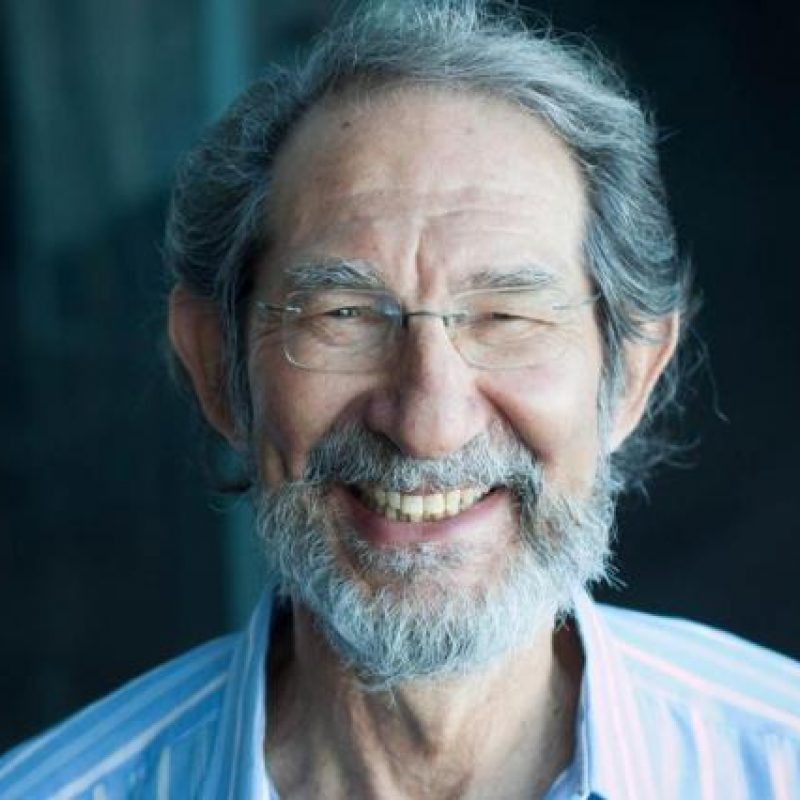
Glad to have you all on here for episode 285 – this one is a treat because it includes visuals of the paintings, sculptures, clothing, and crystals created and procured by Dr. Robby Gordon, who has created the Hollywood Gallery and Sculpture Garden. These entities are packed with artistic works of his own, along with those of many others who he knows of.
Dr. Robby Gordon studied art at the University of California Irvine, Irvine Valley College, and Golden West. He also studied at the University of Bologna and UCLA. He spent his first 21 years in Israel, subsequently moving to Europe, where he studied and became increasingly involved in the art world.
The Hollywood Sculpture Garden as seen at night
Show notes:
Robby’s background as an artist, and some of the various works he has created
how long it took him to set up his gallery in the form that it is, and how he has kept at it daily
some of the countries he has been to, and the culture and artistic sense acquired from those regions
the things he looked for in the residence he would later use to host the gallery, and how it is necessary to pin down what is important to you in life
keeping things varied in terms of types of artistic works made, and how Robby has created in so many styles, such that he takes on a category until he feels like it is on to the next one
the many crystals and rocks that he showcases in his facility
a video walk-through of his gallery, narrated by Robby and recorded by myself
Having Robby on the show, and recording the episode in person, was a nice change of pace for the content. You can check out the Hollywood Gallery and Sculpture Garden website.
Welcome to episode 284 of the show, with Dr. Jeffrey Rediger, MD, MDiv, faculty member at Harvard Medical School, Medical Director of McLean SE Adult Psychiatry Community Affairs at McLean Hospital, and Chief of Behavioral Medicine at Good Samaritan Medical Center.
Dr. Rediger is author of Cured: The Life-Changing Science of Spontaneous Healing, and covers ways that people have been cured or healed without the need for regular types of treatment. Taking into account well-being and a person’s specific needs is something hospitals are doing more and more.
Show notes:
what a medical director does at a hospital, and what Dr. Rediger has been part of for nearly two decades
some of the medical issues that his psychiatric hospital is skilled at dealing with
concepts in Cured, including how healing can take place outside of typical treatment
the way that well-being comes into play, and how placebos can showcase the ability of the body to heal itself
the importance of a diet that has specific elements kept out, which were not natural to humans for most of history
insights about mental health, and the effect of the term
a message to all who could use a guide for their mental well-being
Welcome London Business School Professor Dan Cable to episode 280 of the show. He has come out with a new book titled Exceptional: Build Your Personal Highlight Reel and Unlock Your Potential. Building your highlights into a listing of strengths can give you motivation to use moving forward.
He is Professor of Organizational Behavior and received his Masters and PhD in Labor and Industrial Relations at Cornell University. He gives us guidelines for how to envision our life, focus on what we bring to the table, and grow as a person. He has given a TEDx Talk on how to have a Best-Self Activation, and wrote a previous book in 2018 called Alive at Work.
Show notes:
Professor Cable’s background, and how he got into the field he is currently in
focusing on what we do correctly or well in life
looking at what limits us, whether clearly or in a hidden form
what it means to create your personal highlight reel
imagining your own eulogy, and seeing what that says about your life
crafting a life that you want to live, instead of one that is offered to you without specificity to your taste
Welcome actress and producer Kat Fairaway to episode 279 of the show. Depth is something that Kat represents, and depth is something that I find to be valuable. We can see moments as fleeting elements, or explore them further, such that time allows us to understand more.
Kat is known for her work in productions such as Psycho Escort, Kidnapped by a Classmate and Letters from the Heart. Representing characters in filmography is the heart of Los Angeles, and Kat occupies this great county (as I do). We covered quite a bit about her background, thoughts, and had a bit of fun as well.
Show notes:
Kat’s background, and representing parts of Europe
some of her work in movie/content roles she has been in, whether on Lifetime, Amazon, or elsewhere
being at peace through mindset or meditation
fun with accents, and some swell singing (I also rapped)
a Gary Vaynerchuk message about blocking out unsupportive voices
how one can choose their attitude in response to circumstances
how those who have suffered and not ran away are appealing
picking apart life through doubt, or a different way
To look at something holistically is to look at it with a broad view, as compared with narrowing our perspective and leaving out the bigger picture when making decisions. Dr. Joseph Sarkissian handles the world of dentistry in such a way, treating patients with detail that takes their total health into account, and he joins on this episode of the show.
Dr. Sarkissian runs his dental practice in Glendale, California. He studied microbiology at the University of Alabama, and received his dental degree at the University of Goettingen in West Germany. His practice of dentistry was originally on the Mediterranean island of Cyprus, and he later relocated to Los Angeles, where his own practice is now located. He is of the Armenian people, similar to myself, and represents well for the nation and its continuity of tradition and exploration of its roots.
Show notes:
a bit about Dr. Sarkissian’s national and educational background, linking to how he got where he currently is
holistic or biological dentistry, and the tenets that are followed under that description of practice
impacting the youth, in terms of health and their aesthetic smiles
how dentistry has changed or improved in the past decade
whether mouth breathing or nasal breathing can be noticed by a dentist, and the impacts each type can have
how much tooth health is connected with overall health
the building of one’s own practice, and what it takes to maintain that
the importance of early dental care and adjustment, in prevention of problems decades down the line
how much regular dental care impacts the need for dental work
complex procedures that are performed, and how skill is built up for those
When it comes to interviewers, few are as currently prolific as Ricardo Lopes, host of “The Dissenter”. He is known for his social commentary, provoking thought, having strong opinions, and still being open-minded to new concepts. He hails from Portugal, and has been doing interviews for a few years now.
On his show, Ricardo has spoken with some of the same scientists and researchers I have spoken with, along with many others, including Steven Pinker, Robert Sapolsky, and Noam Chomsky. A big focus of his is social science, and he has spoken with people based on their insights and research, sometimes solely from their research papers.
Show notes:
how Ricardo starting doing interviews, and where he comes from
what The Dissenter podcast is about, and how it is important to keep open-minded about new information coming in
why Ricardo prefers social science and related fields
What is the damage we’re not attending to, with regards to the pandemic? How does biological and social contagion spread based on population and contact networks? How do scaling laws inform us about efficiency and person/city/network growth and change over time? Last month, researcher and professor Dr. Geoffrey West, author of Scale: The Universal Laws of Growth, Innovation, Sustainability, and the Pace of Life in Organisms, Cities, Economies, and Companies, co-wrote an article on the topic of scale in relation to the pandemic with fellow Santa Fe Institute President and researcher Dr. David Krakauer.
Dr. West is a theoretical physicist, who is distinguished and former President of the Santa Fe Institute, a scientific think-tank in Santa Fe, New Mexico, which is able to combine multiple fields of research in ways that were not previously looked at. He is a leading researcher on a scientific model for cities, and is known for the metabolic theory of ecology. His B.A. in Physics is from Cambridge University, and his Ph.D. is from Stanford University.
I originally came across Dr. West’s work through his book Scale, which I summarized chapters of in some of the earliest episodes of this show, specifically 2, 9, and 11. It was informative to me to get a sense of how a population or network develops from early large paths to the smaller nodes at the end, and where there is efficiency in growth that is connected to non-linear scaling ratios. We spoke about the book, as well as a variety of topics.
Show notes:
how Dr. West progressed from his background in the UK to where he is at the current moment
his experience as a researcher and past President at the Santa Fe Institute
progressive from theoretical physics and particles to looking at cities, companies, networks, and global sustainability
fostering collaborations between scientists of different fields, and non-linear thinking as connected with risk-taking
scaling rate as it relates with food requirement for different sizes of organisms
how all organisms are network systems that follow scaling laws
the way that one’s blood vessels share these laws with roads and freeways, trees and branches, and neuron paths in the brain
whether the scaling laws relate with determinism as related to biology, and how biology differs with physics in that regard
our similarities as viewed from a long-distance perspective
the way that one city is similar to other cities, at their respective stages of development, taking into account the specific environmental and cultural variables of the region
Dr. West’s relationship with Dr. Krakauer, and the article they co-wrote
looking at the pandemic as something to focus on, while not forgetting that it is one element of a bigger picture situation humanity is part of
how one item on the planet affects something else on the planet, especially in a heavily interconnected planet
exponential gains, and the lack of understanding that has been associated with the concept
counter-intuitive responses to problems, which require looking at problems with more depth than only repairing directly what is broken at first glance
the reception of science in the public domain, and how that is affecting responses to problems or new scenarios
how higher-level education has been very prolific in its ability to serve as a backbone for society to work from
the way that feel of age can alter based on our current moment
Our time is our own to get things done, for our own form. On episode 273, it is about building your own thing, and not letting your important time slip, though the time not connected to your main projects is not as important.
Show notes:
your self-oriented time
noting the value of moments versus the value of other moments
recognizing that there are some periods of time you can’t afford to let go to any type of waste
Writing in a journal can be the way to some forms of understanding or expression. My recent writings in one contribute to the thoughts in this episode, which is #272 of the show.
Show notes:
How to propel work forward
The way that collaboration can bring out elements that were dormant
Using the “why” behind what you do versus the “how” or “what”
Having a variety of mediums to post on
Moving things around and building kindling for your fire
Imagining how you want your story to go
Little things each day turning into a larger entity
We keep it simple on this fast-paced episode, with insights coming forward in stream of consciousness form. Credit to Toby Emerson for the intro and outro music, and for supporting usage of his music from many years ago for such creative purposes.
Welcome moral and political psychologist Dr. Cory J. Clark to episode 271 of the show~. She has done research in the categories of moral judgment, punishment, free will, political bias, and motivated cognition. Looking at how bias applies in daily discourse or decision-making helps to clear out poor decisions that would have to be corrected at some future instance.
Dr. Clark got her Ph. D. from the University of California, Irvine, in Social and Personality Pyschology and Quantitative Methods, following a B.A. in psychology and philosophy. Some research papers she has contributed to include material on tribalism in different moments of societal condition, political differences in free will belief, and how bias pervades both sides of political landscapes.
Show notes:
how Dr. Clark got into the category of social and personality psychology and quantitative methods at UCI
the way that serendipity and the flow of life can lead us to the next step
connection between punishment and belief of free will, and how that connection affects how people are viewed
how to study individuals seeking out information that supports their beliefs
the better-than-average effect of self-thought in the category of self-serving biases
people bringing out certain sides of personality on social networks, and the mob effect that can apply
the short-term internet response to long-term careers
free will as it applies to the fixed nature of a specific moment in time and the moment that follows it
humans evolving to a point of looking back upon their own thinking in hefty detail
punishment and the moral judgment associated with it as related to a recent death penalty action
the collective nature of people’s actions, as with the internet
a message about perspective to take into account when seeing two-sided issues, which are very common in public discourse
I was glad to have Dr. Clark on the show. Feel free to check out her website, which has all her material well organized, including her research that is easily readable, and her content across other shows.